How to Unclog a Kitchen Drain Without Chemicals?
The kitchen drain is draining like it is thinking about it. You pour water in and it just sits there. The reflex is to grab a bottle of drain cleaner, but before you do — know that liquid drain cleaners are one of the more damaging things you can put down an older plumbing system. In San Diego, where a lot of homes have cast iron or galvanized steel drain lines from the 1960s through the 1980s, harsh chemical cleaners accelerate corrosion and weaken joints that are already aging.
Here are the methods that actually work no chemicals, no damage.
Step 1: Boiling Water (Grease Clogs Only)
If the clog is grease-based which most kitchen drain clogs are boiling or very hot water poured slowly down the drain can melt and flush it through. Do this in three stages with a few seconds between pours. Do not use boiling water on PVC pipes, as extreme heat can soften the joints over time. For PVC, use the hottest tap water you can run instead.
If the drain clears, run hot water for another two minutes to push the loosened grease the rest of the way out. If it does not clear after two rounds, move to the next step.
Step 2: Baking Soda and White Vinegar
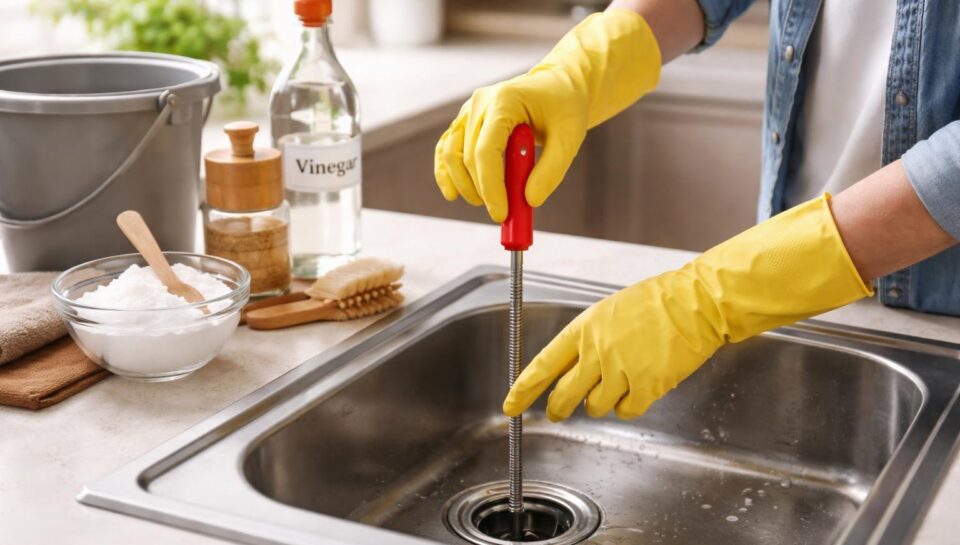
Pour half a cup of baking soda down the drain, followed immediately by half a cup of white vinegar. The fizzing reaction breaks up soft clogs and loosens buildup from pipe walls. Cover the drain opening with a rag or stopper to direct the reaction downward rather than back up, and let it work for 15 to 20 minutes. Follow with a full kettle of hot water.
This method works well on fresh grease buildup and light soap clogs. It will not clear a hair clog, a solid obstruction, or a clog that is further down the line.
Step 3: Plunger (Cup Style, Not Flange)
A cup plunger the flat-bottomed one — is the right tool for a kitchen sink, not a toilet flange plunger. Cover the drain with the plunger and create a tight seal. Pull up firmly rather than pushing down — the upward suction is what dislodges most clogs. Do 10 to 15 firm pulls before checking whether the drain has cleared.
Step 4: Clean the P-Trap
The P-trap is the curved pipe section under the sink. Solid debris, food particles, and grease accumulate here first. Put a bucket underneath, unscrew the slip nuts on either end of the P-trap by hand or with pliers, and pull it out. Clean it out, run water through it to confirm it is clear, and reattach. This is the most effective DIY step for stubborn kitchen clogs.
If none of these clear the drain, the clog is further down the line than a DIY fix can reach.
Call PlumbTech at 1-800-388-8149 for professional drain cleaning in San Diego no chemicals, no damage, cleared right the first time.
When to Stop the DIY and Call a Plumber
If you have worked through all four steps and the drain is still slow or completely blocked, the clog is likely past the P-trap and into the wall line or the main stack. At that point, a professional drain snake or hydro jetting service is the right tool — not another bottle of drain cleaner. Multiple slow drains in the house at the same time also suggest a main line issue that needs a camera inspection, not just a local drain clearing.
Still backed up after trying everything?
Email Plumbtech.pros@gmail.com or call 1-800-388-8149. PlumbTech clears kitchen drains across San Diego fast and without the chemicals that damage your pipes. Request service online here.
Frequently Asked Questions
Are liquid drain cleaners safe for San Diego pipes?
For PVC pipes in good condition, occasional use of enzyme-based drain cleaners is relatively safe. Chemical cleaners like bleach-based or sulfuric acid products are corrosive to cast iron, galvanized steel, and older pipe joints — common in San Diego homes built before 1990. Avoid them if your plumbing is older.
Why does my kitchen drain clog so often?
- Most recurring kitchen drain clogs come down to grease accumulation on the pipe walls over time. Even rinsing cooking grease with hot water sends it partially liquefied down the pipe, where it resolidifies in the cooler section of the line and builds up layer by layer. A professional hydro jetting service removes years of accumulation in a single visit.
Can I use a drain snake myself on a kitchen drain?
- A handheld manual auger from a hardware store works fine for clogs in the P-trap area. For clogs further into the wall or main stack, a professional power auger or hydro jetting is more effective and less likely to damage the pipe.